Category: Candidate Resources
-
East Rand Job Market & Johannesburg South:...
Continue ReadingEast Rand Job Market & JHB South
If you’re looking for work in the East Rand or Johannesburg South, you’re not alone, these areas remain some of the most active job hubs in Gauteng. From retail and admin roles to warehousing, technical work, and management positions, employers are still hiring despite a competitive job market.
At JobGround, we focus on connecting local employers with local talent, and in this post, we’re breaking down:
Which jobs are currently in demand
What types of roles are trending in the East Rand & JHB South
What salaries generally look like right now
How job seekers can improve their chances of getting hired
The Current East Rand & JHB South Job Market
The East Rand and Johannesburg South cover major business and industrial areas including Boksburg, Germiston, Alberton, Kempton Park, Benoni, and surrounding regions. These areas are home to:
Retail centres and malls
Warehousing and logistics hubs
Manufacturing and industrial businesses
Offices, dealerships, and service companies
Because of this mix, the job market here offers a wide range of entry-level, skilled, and management roles, making it ideal for job seekers at different stages of their careers.
Jobs That Are Hiring the Most Right Now
Based on local hiring trends and employer demand, these are some of the most common job categories currently available in the East Rand and Johannesburg South.
Retail & Customer Service Jobs
Retail remains one of the biggest employers in the region.
Common roles include:
Sales Assistants
Cashiers
Shop Assistants
Store Supervisors
Store Managers
These roles are popular in shopping centres, retail chains, and independent stores, with many employers hiring urgently due to staff turnover and extended trading hours.
Admin & Office Jobs
Administrative roles are consistently in demand, especially in small to medium-sized businesses.
Popular positions include:
Receptionists
Administrative Assistants
Office Administrators
Data Capturers
These roles often suit candidates with basic computer skills, good communication, and organisational ability.
Warehousing, Logistics & General Work
With the East Rand being a logistics hub, these jobs remain highly sought-after:
Warehouse Assistants
Pickers and Packers
Forklift Drivers
Dispatch Clerks
General Workers
Many of these roles do not require formal qualifications but do value reliability, physical fitness, and experience.
Technical, Trade & Skilled Jobs
There is steady demand for skilled workers across various industries, including:
Electricians
Technicians
Machine Operators
Quality Controllers
IT and Network Support Roles
These jobs typically offer better pay and long-term stability, especially for candidates with experience or certifications.
Supervisory & Management Roles
While more competitive, management roles are still being advertised regularly:
Operations Managers
Warehouse Supervisors
Retail Managers
Team Leaders
These positions are ideal for candidates looking to move into leadership or take the next step in their careers.
What Jobs Are Paying in the East Rand & JHB South
Salaries vary depending on experience, qualifications, and the employer, but here are realistic monthly pay ranges commonly seen in the region:
East Rand Pay Ranges and Market
Market character: lots of retail (shopping centres), logistics/warehousing (Ekurhuleni industrial belt), light manufacturing and services. Employers frequently advertise temporary, shift and entry roles as well as some mid-skill technical roles.
Typical monthly pay ranges for East Rand (ZAR): Realistic ranges based on local listings and salary aggregators:
Cashier / Shop Assistant / Retail Sales Assistant: R4,500 – R8,000 per month (local cashier averages show R4,700 in East Rand and retail sales averages around R6k nationally).
Retail Supervisor / Assistant Manager: R8,000 – R14,000 per month (varies by chain and benefits; smaller shops pay less and branded retail pays more).
Warehouse Assistant / Picker & Packer: R5,500 – R11,000 per month (hourly estimates from Payscale translate into this monthly band depending on hours/OT).
Forklift / Plant Operators: R9,000 – R14,000 per month (training and licences increase pay).
Admin / Reception / Data Capturer (entry–mid): R6,000 – R12,000 per month (depends on experience and whether temp/perm).
Skilled trades & technicians (electricians, machine operators): R12,000 – R25,000+ per month (specialised skills or certified trades attract higher offers).
Notes about East Rand numbers: retail and warehouse roles are the bulk of postings. Many entry roles are on the lower end of the ranges, but experienced supervisors and certified technicians push into the mid/high bands.
Johannesburg South Pay Ranges and Market
Market character: mixed residential and commercial suburbs feeding into inner-city and industrial employers. You will find retail in malls, service industry roles, and some light industry/warehousing.
Typical monthly pay ranges for JHB South (ZAR):
Sales Assistant / Retail Sales: R5,500 – R9,000 per month (Sales assistant averages in Johannesburg region are between R6- 7k).
Cashiers: R5,000 – R8,500 per month (local listings show advertised cashier roles between R6k – R6.5k).
Store Manager / Retail Manager: R12,000 – R25,000 per month (regional averages for store managers in Johannesburg vary. Job listings show an average around R11k – R14k but bigger chains pay more).
Warehouse Worker / General Logistics: R7,000 – R13,000 per month (Job listings show the regional average for a warehouse worker in Johannesburg is around R8.6k).
Forklift Operator / Skilled warehouse roles: R9,000 – R15,000 per month (licensed operators toward higher end).
Admin / Office Support: R6,000 – R14,000 per month (varies widely by seniority and permanence).
Notes about Johannesburg South numbers: because Johannesburg has more corporate listings overall, managerial roles can scale higher if employers are national chains or larger corporate stores. Smaller neighbourhood shops typically sit toward the lower end.
Quick comparison: East Rand vs Johannesburg South
Entry retail & cashier pay: broadly similar, with East Rand leaning slightly lower on average (R4.8k) while Johannesburg region sales roles show between R6 – 7k.
Warehouse & logistics: both areas show strong demand. Johannesburg averages for a warehouse worker are R8.6k while Payscale data suggests wide variation depending on hours, overtime and skills (R5.5k – R13k typical).
Supervisory & manager roles: Johannesburg posts slightly higher (store managers R11 – 14k typical on job boards), but experienced managers in branded retail can command R20k+.
Tip: Always read the full job description and ask about growth opportunities. Many employers offer increases after probation or performance reviews.
Tips for Job Seekers Applying in These Areas
If you’re applying for jobs in the East Rand or Johannesburg South, these tips can help improve your chances:
Keep Your CV Simple and Clear
Most employers want a short, easy-to-read CV. Focus on:
Relevant experience
Practical skills
Contact details that work
Apply for Local Jobs
Employers often prefer candidates who live nearby due to transport reliability and availability.
Check JobGround Regularly
New jobs are added often, and early applicants usually have an advantage.
Be Honest About Your Experience
It’s better to be honest and show willingness to learn than to oversell your skills.
Read our Guide on how to Build a Professional CV & Cover Letter here
The East Rand and Johannesburg South continue to offer real job opportunities for people willing to apply, show up, and grow. No matter if you’re looking for your first job, a career change, or a step up, staying informed and applying consistently makes a difference.
Browse the latest jobs on JobGround and take the next step in your job search today.
-

Top High-Demand Skills South African Employers Want...
Continue ReadingWhat are the top high-demand skills SA Employers want right now? Well, the landscape of youth employment in SA is shifting rapidly. Gone are the days when a generic degree was a guaranteed golden ticket to a stable career. As we look towards 2026, South African employers, especially growing Small and Medium Enterprises (SMEs), are looking for a different kind of candidate. They need agile problem-solvers equipped with a blend of modern technical know-how and resilient human skills.
If you are looking for jobs in demand in SA, you need more than just a CV, you need a strategy. At JobGround, we are dedicated to planting the seeds of SA’s future by connecting talent with opportunity in a fresh, uncluttered way.
Here is your map to the top high-demand skills South Africa 2026 will require, and how you can prepare today.
1. The New Baseline: Beyond Basic Digital Literacy
A few years ago, “digital literacy” meant knowing how to send an email and use a spreadsheet. In 2026, that’s just the entry requirement. Today, high-demand skills in South Africa almost always involve a deeper level of digital fluency, even in non-tech roles.
Employers are looking for candidates who are comfortable working alongside technology.
AI Proficiency: You don’t need to be a coder, but a marketing assistant needs to know how to use generative AI tools for drafting copy, and an admin clerk should understand how AI automation can speed up data entry.
Cloud Collaboration: Proficiency in tools like Google Workspace, Microsoft Teams, and project management software (like Trello or Asana) is essential for remote and hybrid work environments.
If you want to secure entry level jobs in South Africa, prove that you can adapt to new digital tools quickly.
2. The Growth Engines: The Green Economy and Supply Chain
While some sectors shrink, others are exploding with opportunity. Two areas actively driving jobs in demand in SA right now are the Green Economy and sophisticated Supply Chain Management.
The Green Economy: South Africa’s push towards renewable energy and sustainability is creating new roles daily. This isn’t just for engineers; there is a high demand for project coordinators, compliance officers, and sales technicians in the solar, wind, and water management sectors.
Supply Chain & Logistics: In a globalized (and sometimes disrupted) world, getting goods from A to B efficiently is crucial. SMEs need skilled logistics coordinators, inventory analysts, and procurement specialists who can navigate complex systems to save costs.
3. The Human Edge: Adaptability and Critical Thinking
In a world increasingly automated by machines, human skills are becoming more valuable, not less. This is especially true for South African SMEs. A small business doesn’t just need an employee to fill a seat; they need an “all-rounder” who can wear multiple hats.
Employers are desperately seeking these soft skills:
Adaptability: The market changes fast. Can you pivot from a marketing task to a customer service crisis without losing your cool?
Critical Thinking: Don’t just follow instructions. Employers want team members who can look at a process, identify a bottleneck, and suggest a better way to do it.
Developing these traits makes you “future-proof” and highly attractive for youth employment in SA.
4. Finding the Opportunities: The “Clean Search” Experience
Knowing what skills you need is half the battle. The other half is finding the companies that are hiring.
Too many young South Africans waste hours scrolling through outdated, massive job boards cluttered with “ghost ads” for positions that were filled months ago. It’s frustrating and demoralizing.
JobGround is different. We built a fresh, clean platform that prioritizes quality over quantity. Because we don’t boast millions of outdated listings, you don’t have to sift through the noise. When you search for entry level jobs in South Africa on JobGround, you are seeing real opportunities from employers who want their ads to be seen by bright talent like you.
Map Your Future Today
The 2026 job market belongs to those who prepare for it now. By sharpening your digital tools, focusing on growth sectors, and honing your adaptability, you will be the candidate employers fight over.
Don’t let your skills get lost in the crowd. Grab your free Cover Letter template, as well as your free Premium CV package and create your profile on JobGround today.
Start your clean search for the career you deserve. Let’s plant the seeds of your future, together.
-
The Ultimate Interview Preparation Guide: How to...
Continue Reading

Our interview preparation guide helps you master that moment you receive the interview confirmation, a wave of excitement where you’ve cleared the first hurdle and your CV has done its job. But as the initial excitement settles, the real question creeps in, “How do I actually land the job?” or “What questions are they going to ask me?”
In the evolving South African job market of 2026, where digital presence and cultural fit are just as vital as technical skill, winging it is no longer an option. Regardless of whether you are a recent graduate stepping into your first role or a seasoned professional pivoting to a new industry, the interview is your stage to prove you are the solution to an employer’s problem.
We believe that preparation is the bridge between being a candidate and becoming a colleague and this guide is designed to give you that competitive edge, walking you through everything from deep-dive research to the final, high-impact questions that leave a lasting impression.
1. The Pre-Interview Intelligence Phase
Success starts long before you walk through the door or log onto the call. You need to build a profile of the company.
Analyze the Job Description (JD): Don’t just read it, dissect it. Highlight the top three skills they are looking for. These are the pain points the employer has. Your preparation should focus on how you can heal those points.
The 3-Tier Research:
The Company: What is their mission? Have they been in the news recently?
The Role: How does this position contribute to the company’s bottom line?
The Interviewer: Look them up on LinkedIn. Finding a commonality (like a shared university or previous company) can be a great icebreaker.
2. Master the STAR Technique
Modern interviews are behavioral. Employers believe that past behavior predicts future performance.
To answer “Tell me about a time when…” questions, use the STAR method to keep your answers structured and concise.
Element Description Your Focus Situation Set the context. Keep it brief (1-2 sentences). Task What was the challenge? Define the goal clearly. Action What did YOU do? This is the meat of your answer. Use “I,” not “we.” Result What was the outcome? Use data or specific praise received. 3. Preparing for the Big Five Questions in Job Interviews
While every interview is different, these five questions appear in almost every industry. You should have scripts ready for these:
“Tell me about yourself”: The Formula: Past (your background) + Present (what you do now) + Future (why you want this specific job).
“What is your greatest weakness?”: The Strategy: Pick a real, work-related weakness that is fixable. Explain the steps you are currently taking to improve it.
“Why should we hire you?”: The Strategy: Summarize your “Unique Selling Point.” Match your top three skills directly to the top three requirements in the JD.
“Where do you see yourself in five years?”: The Strategy: Employers want to see ambition but also stability. Show how this role is a logical step in your long-term career path.
“Do you have any questions for us?”: The Strategy: Never say no. Ask: “What does success look like in this role after six months?” or “How does the team handle tight deadlines?”
Handling the Salary Question “What are your salary expectations?”
The Strategy: Avoid giving a single hard number too early. Instead, provide a researched range. The Script: “Based on my research of similar roles in the East Rand/JHB South area and my 15 years of experience, I am looking for a package in the range of [RXX,XXX] to [RXX,XXX]. However, I am open to discussing the full benefits package as well.”
💡Tip: Practice your answers out loud. What sounds good in your head often needs refinement when spoken. Record yourself on your phone to check for “ums,” “ahs,” and pacing.
4. The Technical & Visual Check
In 2026, the how is just as important as the what.
For Virtual Job Interviews:
Lighting: Ensure the light source is in front of you, not behind you (which creates a silhouette).
Eye Contact: Look directly into the webcam lens, not at the person’s face on the screen. This mimics real eye contact for the interviewer.
The Mute Rule: Stay on mute when the interviewer is giving a long explanation to avoid background noise interference.
For In-Person Job Interviews:
The 15-Minute Rule: Arrive in the parking lot 15 minutes early, but only walk into the building 5 minutes early.
Non-Verbal Cues: A firm (but not crushing) handshake, upright posture, and active nodding show engagement and confidence.
The 2026 AI & Digital Filter
The One-Way Video Interview: Many SMEs now use automated tools where you record answers to a screen. Treat the camera like a person. Don’t read from notes—the AI software often tracks eye movement to see if you are being authentic.
The Digital Savvy Question: Be ready for the question: “How do you use AI tools (like ChatGPT or Copilot) to improve your work efficiency?” Showing you are comfortable with modern tools is a huge competitive advantage today.
10 High-Impact Questions to Ask in a Job Interview
When the interviewer asks, “Do you have any questions for us?” use these to stand out. Pick 2 or 3 that feel right for the conversation.
“How would you describe the team’s working style?” (Shows you care about fit).
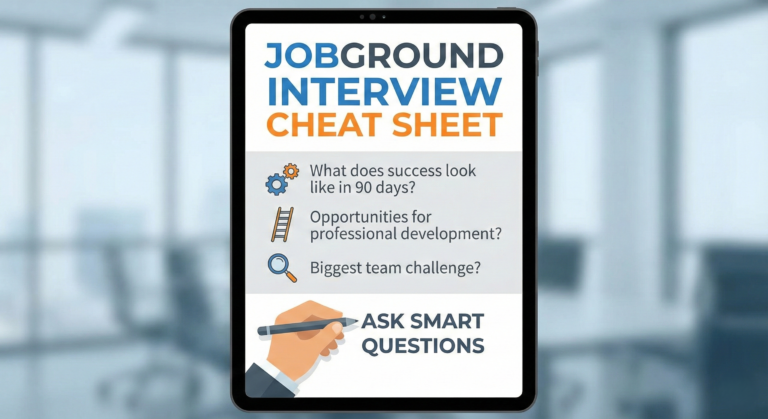
“What would success look like for this role after the first 90 days?” (Shows you are goal-oriented).
“What is the one thing that surprised you most about working here?” (Gets an honest insight into culture).
“Are there opportunities for professional development or upskilling?” (Shows ambition).
“What is the biggest challenge the team is currently facing?” (Positions you as a problem-solver).
“How does this department contribute to the company’s 2026 goals?” (Shows big-picture thinking).
“What is the company’s approach to innovation?” (Shows interest in longevity).
“Who would I be reporting to directly, and what is their management style?” (Shows you want to align with leadership).
“Is there anything about my background you’d like me to clarify?” (The “Power Move” to address any doubts).
“What are the next steps in the process, and when can I expect to hear back?” (Essential logistics).
Tip: Don’t ask all 10! Pick 3 that feel most relevant to the conversation you just had. Write them down in a notebook and bring it with you. It’s perfectly acceptable to refer to your notes at the end of an interview.
Post-Interview: The Golden Follow-Up
The interview doesn’t end when you leave the room.
The 24-Hour Rule: Send a personalized thank-you email within 24 hours.
The Value Add: In your email, mention one specific thing you discussed. For example: “I really enjoyed our conversation about your upcoming expansion into the Western Cape. It sounds like an exciting challenge.”
The job market can feel daunting, but remember, South African employers are looking for your energy, your local insights, and your willingness to learn. Use this guide, prepare thoroughly, and go into that room knowing you have value to add.
We wish you the best of luck!
-
How to Build a Professional CV &...
Continue ReadingKnowing how to build a professional CV & cover letter when searching for a job can feel overwhelming for a lot of job seekers. With hundreds of applicants for every role in South Africa, how do you ensure your application doesn’t just end up in the “discard” pile?
The secret lies in the details. As a recruiter with over 15 years of experience in the South African market, I’ve seen what works and what doesn’t. This guide will walk you through building a modern CV from scratch.
Part 1: The Anatomy of a Professional Winning CV
A professional CV should be clean, easy to read, and most importantly, optimized for both human recruiters and Applicant Tracking Systems (ATS).
1. Contact Information
Keep it professional. Include your full name, phone number, a professional email address (e.g., firstname.lastname@email.com), and your LinkedIn profile URL.
*Tip: You no longer need to include your full home address; your city and province are sufficient.
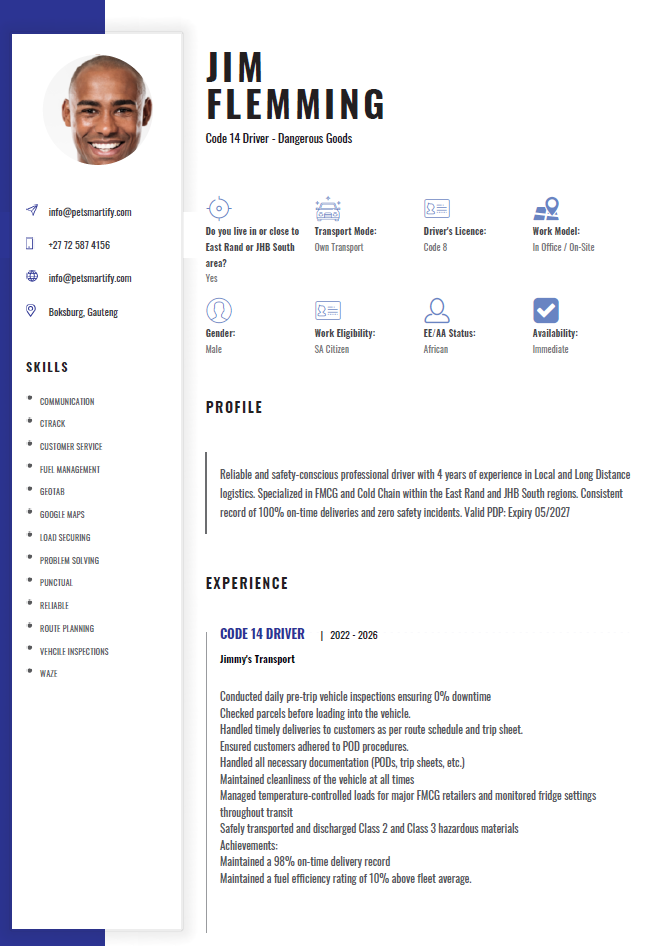
The “License” Advantage: In SA, many roles require a Code 8 or Code 10 driver’s license. If you have one (and especially a PDP), list it here clearly. Don’t make the recruiter hunt for it!
2. The Professional Summary
This is your “elevator pitch.” In 3–4 sentences, highlight who you are, your top achievements, and what you bring to the table.
Instead of: “Hardworking individual looking for a job.”
Try: “Result-driven Marketing Specialist with 5+ years of experience in digital strategy and a proven track record of increasing brand engagement by 40%.”
3. Core Skills & The Language Advantage
Use a bulleted list to highlight technical skills (e.g., Python, Project Management) and soft skills (e.g., Leadership, Communication). Match these skills to the keywords found in the job description.
Local Insight: Are you fluent in isiZulu, Afrikaans, Sesotho, or Xhosa? List it! In our multi-cultural business environment, being multilingual is a massive competitive edge, especially in SME and front-facing roles.
4. Work Experience (The ZAR Factor)
List your experience from most recent to oldest. Focus on achievements, not just tasks. Use the STAR method (Situation, Task, Action, Result) to quantify your impact.
Example: “Optimized the delivery route for a local courier, saving the company R25,000 in fuel costs over six months” or “Managed a team of 5 to deliver a project 2 weeks ahead of schedule, saving the company R50,000 in operational costs.”
5. Education and Certifications
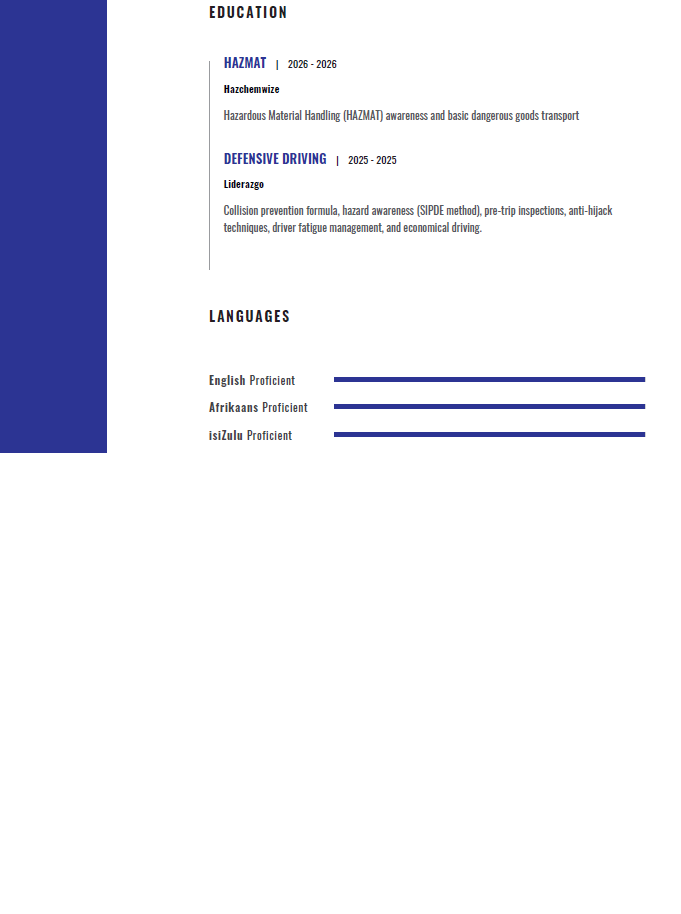
List your highest qualifications first. In 2026, continuous learning is highly valued, so don’t forget to include recent online certifications or workshops.
Part 2: The Perfect Cover Letter
If the CV is the “what,” the cover letter is the “why.” It’s your chance to show personality and explain why you are a perfect cultural fit.
The Structure:
The Hook: Start with a strong opening. Mention the specific role and why you are excited about the company.
Focus on Achievements (The STAR Method):
Situation/Task: What was the challenge?
Action: What did you specifically do?
Result: Use a number! (e.g., “Saved R20 000,” “Managed 10 people,” or “Reduced errors by 15%).
The Bridge: Connect your specific experiences to the company’s current needs. If they are an SME in Alberton expanding to Cape Town, explain how you’ve handled growth before.
The Call to Action: Close professionally. Reiterate your interest and state that you look forward to discussing how you can contribute to their team.
💡Pro Tip: Instead of “To Whom It May Concern,” try to find the name of the Hiring Manager on LinkedIn. Addressing a letter to “Dear Mr. Sithole” or “Dear Ms. Jacobs” immediately puts you in the top 5% of applicants.
Part 3: The South African "Must Haves" for 2026
– Tailor Every Application: Never send the same CV twice. Adjust your keywords for every job listing.
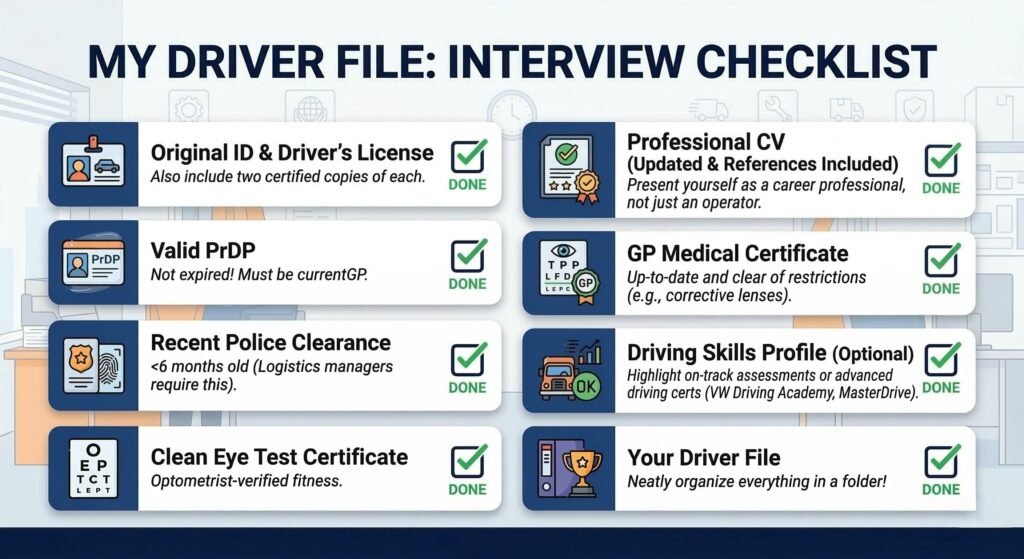
– ID Numbers & Criminal Record: Many SA employers require a clear criminal record. Mentioning “Clear criminal record and valid South African ID” at the bottom of your CV can speed up the vetting process for SMEs.
– PDF is King: Unless specifically asked for a Word document, always save your CV as a PDF. It ensures your formatting stays perfect, whether the recruiter opens it on a laptop in Sandton or a phone in Soweto.
– Data-Light CVs: Keep your file size small. Many recruiters and small business owners are checking applications on the go using mobile data. A 10MB CV might get skipped!
– Proofread: A single typo in your email address or a former employer’s name can cost you the interview.
Final Thoughts
Your CV is a living document. Even if you aren’t actively looking, update it every six months with new skills and achievements. By following this guide, you aren’t just applying for a job, you’re presenting yourself as the solution to an employer’s problem.
Stop Struggling with Formatting!
We know that making a CV look professional in Word can be a nightmare. That’s why JobGround provides Free Premium CV Templates for all our registered users.
Our templates are:
ATS-Friendly: Designed to pass through scanning software.
Modern & Clean: Proven layouts that South African recruiters love.
Easy to Use: Just sign up, choose your favorite template, and plug in your details.